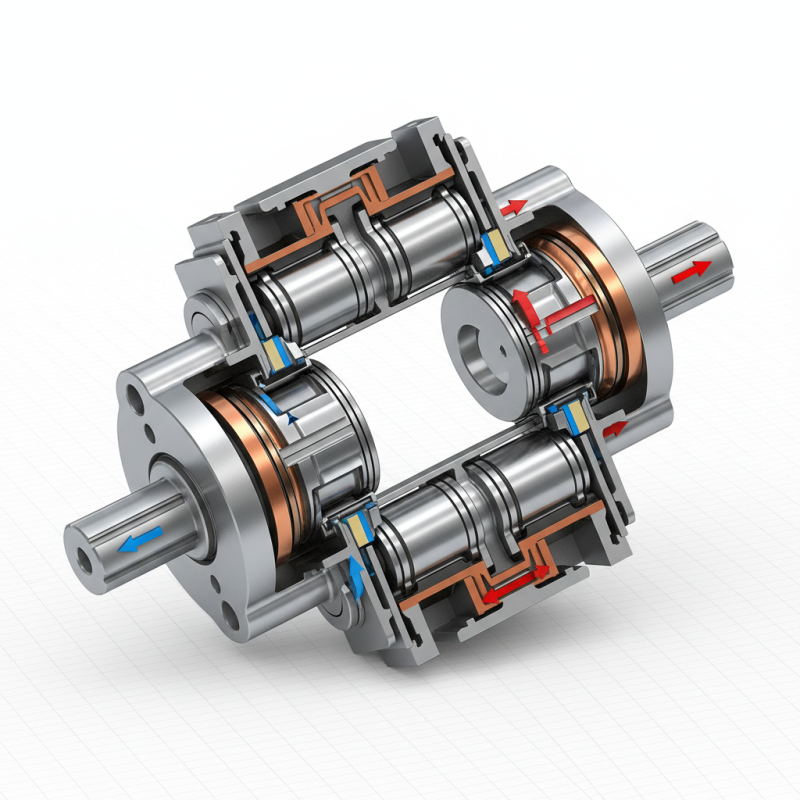
What is a Bent-axis Motor and How Does it Work?
The Bent-axis Motor is a unique type of hydraulic motor. It operates on a fascinating principle of geometry and fluid dynamics. This motor type uses a bent axis, which allows for efficient energy conversion.
In recent years, its applications have expanded in various industries. The design might seem simple, yet it can be complex in execution. It’s important to understand that not all designs are flawless. Some models may have limitations.
Engineers often face challenges in maximizing efficiency. Each component must work harmoniously. Therefore, a bent-axis motor's function involves careful calibration. The balance between power and speed is crucial. A well-designed motor can greatly enhance system performance. However, imperfections may still emerge. Understanding these nuances leads to better production and application.
What is a Bent-axis Motor? Definition and Overview
A bent-axis motor is a specific type of hydraulic motor. It operates on the principle of converting hydraulic energy into mechanical energy. The design features a shaft that is positioned at an angle to the cylinder. This unique configuration allows for more efficient operation compared to traditional hydraulic motors. Recent industry reports suggest that bent-axis motors can be up to 90% efficient. This efficiency makes them suitable for various applications, including construction and mobile machinery.
One notable aspect is their ability to handle high pressure and speed. This flexibility allows engineers to optimize performance in demanding environments. However, installation challenges may arise due to their design complexities. It's essential to ensure proper alignment during setup. Without this, performance can suffer significantly.
Tips: When considering a bent-axis motor, review its specifications carefully. Understand the operating limits to avoid unexpected failures. Regular maintenance is crucial to prolong its lifespan. Always consult with professionals for the best practices in installation and troubleshooting.
Basic Operating Principles of Bent-axis Motors
Bent-axis motors are a unique type of hydraulic motor. They operate based on the axial offset between the input shaft and the cylinder barrel. When the input shaft rotates, it causes the cylinders to move in a circular path. This movement generates hydraulic pressure, which powers various applications.
The efficiency of bent-axis motors is noteworthy. Industry reports suggest they can achieve up to 95% efficiency under optimal conditions. This makes them ideal for high-performance tasks. However, their design can lead to challenges. Misalignment issues can affect performance. Regular maintenance is crucial to keep these motors running smoothly.
Tips: Ensure proper alignment during installation. Even slight deviations can reduce efficiency. Keep the hydraulic fluid clean to enhance performance. Contaminated fluid can cause wear and tear over time.
The basic operating principle relies on the angle of the cylinder. If the angle is too steep, the motor may experience a drop in output. Adjustments should be made accordingly. Understanding these nuances is essential for operators aiming for optimal performance.
Key Components of Bent-axis Motors and Their Functions
Bent-axis motors have unique components that play vital roles in their operations. The most notable part is the rotor. This cylindrical structure rotates around an axis, enabling the conversion of hydraulic pressure into mechanical energy. The rotor's angled arrangement allows for high torque generation, making these motors efficient for various applications.
Another critical component is the stator. It houses the rotor and contains the inlet and outlet ports for fluid flow. The stator's design ensures smooth fluid dynamics, contributing to the motor's overall performance. However, improper alignment of the stator and rotor can lead to inefficiencies. Regular maintenance checks can help in identifying these misalignments early.
Tips for enhancing the lifespan of bent-axis motors:
- Checking filters regularly. Contaminants can degrade performance over time.
- Ensure that the hydraulic fluid is clean and at the proper levels.
- Monitor temperature ranges, as extreme deviations can cause operational failures.
- Always refer to the service manual for guidelines on component specifics.
Adopting these practices can drastically improve reliability while minimizing unexpected breakdowns.
Applications of Bent-axis Motors in Various Industries
Bent-axis motors are increasingly gaining traction across various industries. These motors are compact and offer high efficiency. They excel in applications where power density is crucial. In the construction and agriculture sectors, bent-axis motors are used in hydraulic systems. They provide reliable torque and speed control. According to a market analysis, the construction equipment sector is expected to grow by 5.4% annually through 2026. This growth indicates a rising demand for effective hydraulic solutions.
In the renewable energy sector, bent-axis motors play a vital role in wind turbines. They contribute to the efficiency of energy conversion processes. A recent report highlighted that wind energy capacity is expected to increase by 22% globally by 2025. With this growth, the need for advanced motor systems will also rise. However, challenges remain in optimizing these motors for extreme environmental conditions. These factors must be addressed for the motors to fully realize their potential.
Automotive industries also benefit from bent-axis motors. They are ideal for electric and hybrid vehicles. The adoption of electrification in automobiles continues to rise, with projections suggesting a compound annual growth rate of 18% through 2030. However, energy losses during operation need improvement. Addressing these inefficiencies can enhance overall performance. As industries explore bent-axis motors, there’s room for innovation and adaptation. The future looks promising, yet caution is necessary in implementation.
What is a Bent-axis Motor and How Does it Work? - Applications of Bent-axis Motors in Various Industries
| Application Area | Industry | Advantages | Typical Power Range |
| Mobile Machinery | Construction | High torque at low speeds | 10 - 60 kW |
| Agricultural Equipment | Agriculture | Compact design, high efficiency | 20 - 100 kW |
| Hydraulic Systems | Manufacturing | High reliability and performance | 5 - 50 kW |
| Marine Applications | Marine | Resistance to harsh environments | 15 - 300 kW |
| Robotics | Automation | Precise control and high responsiveness | 1 - 10 kW |
Performance Metrics and Efficiency of Bent-axis Motors
Bent-axis motors are gaining traction in various industries due to their unique design. They feature a shaft that is inclined at an angle to the axis of the motor. This design offers certain advantages in terms of performance metrics and efficiency.
Efficiency is a vital aspect when discussing bent-axis motors. According to industry reports, these motors can achieve efficiencies up to 90%. This high efficiency often translates into lower operating costs over time.
Tip: When selecting a bent-axis motor, consider the application requirements. Different configurations can lead to varied performance outcomes.
Performance metrics also reveal compelling insights. Bent-axis motors provide high torque at lower speeds, making them suitable for applications demanding consistent power. Moreover, they tend to have better power density compared to traditional motors.
Tip: Verify the torque output specifications to ensure compatibility with your project requirements. Overestimating your needs may lead to suboptimal performance.
Despite these advantages, potential drawbacks exist. Some users report increased heat generation, particularly under heavy loads. This can impact longevity and efficiency. Careful monitoring is necessary to avoid performance dips.