How to Choose the Right Metal Forge for Your Needs?
Choosing the right Metal Forge for your needs can be a daunting task. Industry expert Richard Falco, who has over 20 years of experience in metalworking, once said, "Selecting a forge is about matching your specific requirements with the forge's capabilities." This highlights the importance of understanding both your project needs and the features of different forges.
When exploring forges, consider the materials you plan to work with and the types of projects you aim to complete. Factors like size, fuel type, and temperature range are crucial. A lightweight propane forge may be suitable for beginners, while seasoned professionals might prefer a larger coal forge for high-temperature applications.
However, your choice isn't just about specifications. Reflections on your past experiences with metalworking can guide you as well. Consider what worked and what didn’t. This thoughtful approach, combined with expert insights, can lead you to the ideal metal forge that aligns with your creative aspirations.
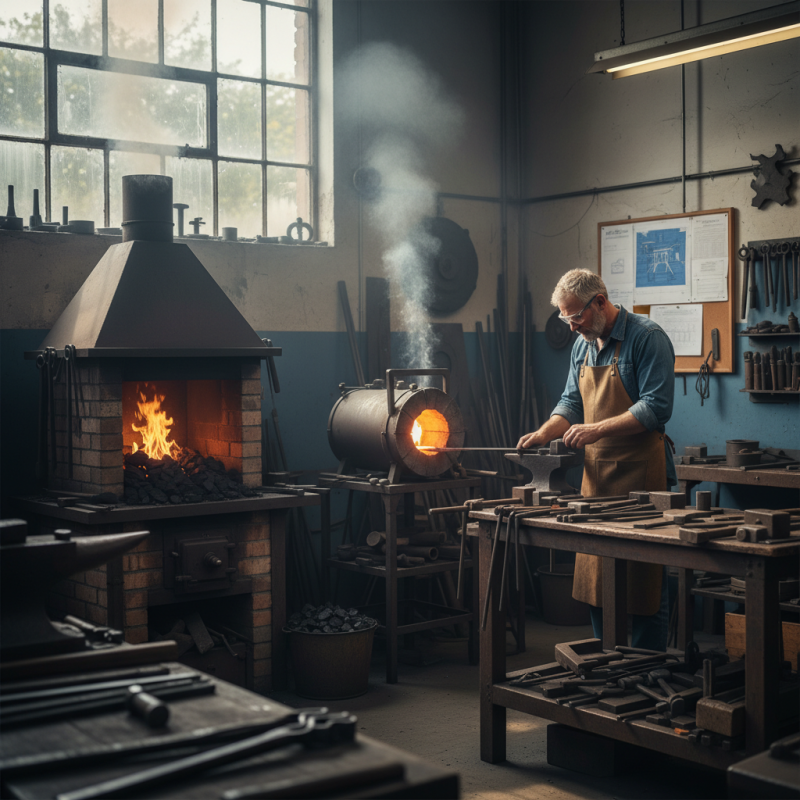
Understanding Your Metal Forging Needs
Choosing the right metal forge requires a clear understanding of your specific forging needs. The metal forging industry has shown a growing demand, with the market projected to reach $231.3 billion by 2026, growing at a CAGR of 4.5%. This growth indicates the importance of tailored forging solutions for different applications.
When assessing your needs, consider the types of metals you plan to forge. Some processes are better suited for steel, while others may work better with aluminum or titanium. Each metal requires different techniques, temperatures, and forge types. It’s essential to match your material with the appropriate forge type to achieve optimal results.
Tips: Evaluate your production volume and scale. A smaller forge may suffice for hobbyist projects, but larger operations require more robust equipment. Research recent industry trends. Understanding these can inform your choices and highlight which forge setups have proven effective in similar applications. Take the time to consult with industry experts. Their insights can help eliminate costly mistakes and align your goals with proven methodologies.
Types of Metal Forges and Their Applications
When selecting a metal forge, understanding the types available is crucial. Broadly, forges are categorized into gas, electric, and coal. Each type serves specific applications. Gas forges offer quick heating and are easy to manage. They are excellent for small-scale projects and often favored by hobbyists.
Electric forges provide consistent temperature control. This makes them useful for intricate metalworking tasks. Their efficiency is appealing for both professionals and hobbyists. Coal forges, while less common, are favored for blacksmithing. They produce high temperatures, ideal for shaping and forging high-carbon steels.
Your choice should consider the intended application. For example, if you prefer portability, gas forges might suit you best. However, if you require precision, an electric forge can deliver that. It's important to evaluate your space and budget. Balancing these factors will lead to a more informed decision. Explore your needs carefully and reflect on your long-term goals.
Metal Forge Types and Their Applications
Key Features to Look for in a Metal Forge
When choosing a metal forge, it’s crucial to evaluate specific features that ensure the equipment meets your needs. Consider the forge type—gas, electric, or coal. Each type has unique benefits; for instance, gas forges heat up quickly, while coal forges offer traditional charm. According to recent industry reports, over 70% of metalworkers prefer gas forges for their efficiency and ease of use.
Size and portability matter too. A compact forge suits those with limited workshop space, while larger setups allow for more extensive projects. Some forges weigh over 100 pounds, limiting movement. Be mindful of your workspace’s dimensions. Moreover, temperature control is vital for precision. Many forges achieve temperatures exceeding 2000°F. Reliable temperature gauges can make a significant difference in achieving desired metal properties.
In addition, safety features should not be overlooked. Proper ventilation, emergency shut-off systems, and protective gear are essential for operating any forge. A 2022 survey indicated that over 30% of metalworkers reported safety concerns within their workshops. Investing in safety features is not just a choice; it’s a responsibility. Each of these aspects requires careful thought to ensure that your selected forge aligns with your specific metalworking ambitions.
How to Choose the Right Metal Forge for Your Needs? - Key Features to Look for in a Metal Forge
| Feature | Description | Importance |
| Forge Size | The physical dimensions of the forge that determine the maximum size of workpieces. | High |
| Type of Fuel | The energy source used, such as propane, natural gas, or coal. | Medium |
| Heating Capacity | The maximum temperature the forge can achieve for metalworking. | High |
| Material Construction | The materials used to build the forge, such as refractory bricks and steel. | High |
| Portability | Whether the forge is easily movable or stationary, affecting its use cases. | Medium |
| Temperature Control | The ability to regulate and maintain consistent temperatures for precision work. | High |
| Safety Features | Built-in safety measures to protect users, including emergency shutoff and insulation. | High |
Evaluating the Quality and Durability of Forges
When selecting a metal forge, evaluating quality and durability is crucial. A well-constructed forge withstands high temperatures and extensive use. Look for materials like heavy-duty steel for longevity. This often indicates reliability. Pay attention to the joints and seams. Flaws here may lead to potential issues during operation.
Inspecting the heating elements is essential. They should distribute heat evenly for optimal performance. In some cases, unevenly heated areas can cause weak spots in your work. Furthermore, consider the overall design. A compact, ergonomic forge may offer better usability and efficiency for extended periods. Check online reviews and forums for user experiences. These insights often highlight strengths and weaknesses.
Don't rush the decision process. Take time to consider your specific needs. What type of metal work will you perform? Different methods may require diverse forge features. Always question the durability claims. Sometimes, manufacturers may exaggerate. A transparent discussion with suppliers can help clarify uncertainties. A well-informed decision is the key to finding a forge that meets your unique requirements.
Budget Considerations for Purchasing a Metal Forge
When choosing a metal forge, budget considerations are crucial. The cost of a metal forge varies widely, influenced by size, type, and features. On average, hobbyist forges can range from $200 to $2,000, while industrial options often exceed $10,000. Factor in additional expenses, such as tools, fuel, and safety gear, which can significantly impact your overall budget.
Investing in quality pays off. According to industry reports, a well-constructed forge can enhance efficiency by up to 30%. However, cheaper forges may require frequent repairs. This leads to hidden costs that can outweigh initial savings. Be cautious of bargains that compromise safety and durability. A lack of sturdy materials might affect the forge's longevity and your working experience.
Consider your needs carefully. A small forge may suit beginners, yet a larger setup might benefit professionals. Reflecting on your goals helps avoid overspending. It's essential to research and ensure that the chosen forge meets both your budget and your expectations.