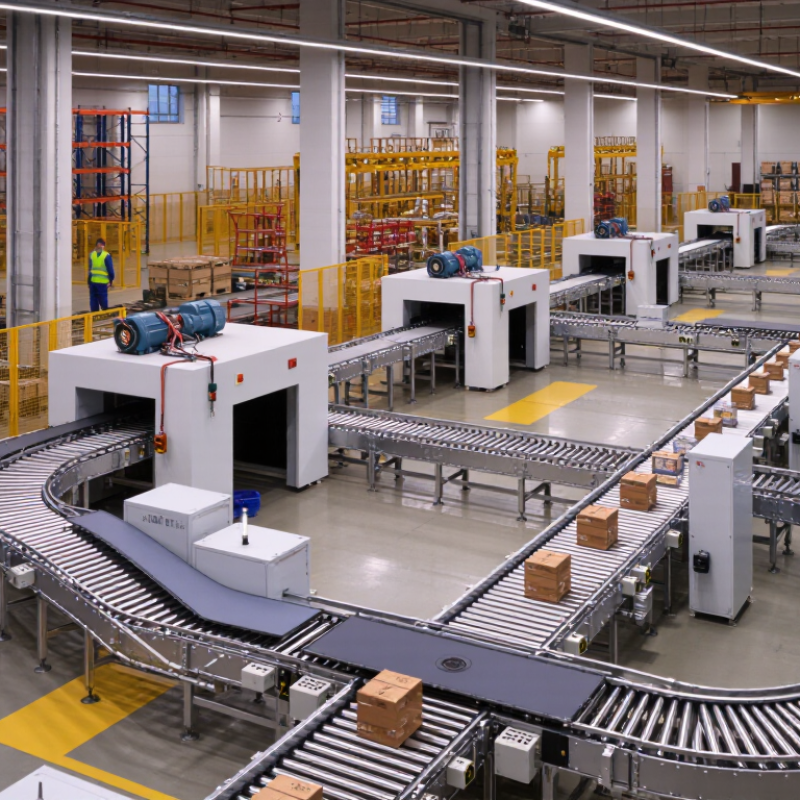
Why Choose a Top Chain Conveyor for Global Manufacturing?
Global manufacturing demands steady movement, clean transfers, and reliable production timing. A Top Chain Conveyor can support these needs across food processing, packaging, automotive, and consumer goods facilities. Its modular chain surface carries products through straight sections, curves, inclines, and controlled accumulation zones. Operators can inspect, clean, and replace individual components without rebuilding the entire line. That practical flexibility matters when every production minute has value.
Dr. Gabriel Lodewijks, a respected conveyor-technology researcher, offers a useful engineering principle: “A conveyor system must be designed as a complete system, not as isolated components.” This perspective guides responsible Top Chain Conveyor selection. Engineers should examine product size, load weight, speed, temperature, sanitation requirements, and available floor space. A stainless-steel frame may suit washdown areas. Low-friction wear strips can reduce chain resistance. Proper sprocket alignment helps prevent uneven wear and unexpected stoppages.
Real performance depends on more than the conveyor itself. Motors, sensors, transfers, guarding, controls, and maintenance access must work together. Yet no conveyor is perfect. Poor loading can damage products. Incorrect tension can shorten chain life. An attractive specification may still fail in a demanding factory. Careful testing remains essential. Manufacturers should compare lifecycle cost, spare-part availability, service support, and energy use before making a global investment. With disciplined design and honest evaluation, a Top Chain Conveyor can become a dependable link between raw materials, production stations, and finished-goods packaging.
A top chain conveyor is a powered transport system with a continuous chain surface. Products rest directly on its linked plates. A motor turns drive sprockets, which pull the chain around a guided frame. Return rails support the chain underneath. Side guides keep containers aligned during movement.
The system handles bottles, cartons, trays, and packaged components. Its modular design supports straight lines, curves, elevation changes, and transfers between machines.
Stainless steel chains suit wet or demanding areas. Plastic chains can reduce noise and product scuffing.
In real plant assessments, correct chain selection matters more than appearance. A weak choice may cause slipping, wear, or unstable transfers. Speed, product weight, surface friction, and cleaning requirements should be checked together.
Tips: Keep the chain correctly tensioned, but avoid excessive tension. Inspect sprockets, guides, and lubrication points during scheduled maintenance. Leave access space around the drive unit. This small detail is often missed. Test products at normal and peak speeds before full installation. Record unusual vibration or noise early. Sometimes, a minor alignment error becomes expensive downtime.
Top chain conveyors support manufacturing processes that need controlled movement, clean handling, and flexible layouts. They are especially useful for bottling, packaging, assembly, and inspection lines. Their linked surface can carry containers, cartons, trays, and small components through straight sections and curves. This reduces manual transfers between workstations.
Food and beverage plants often use them for filled bottles, cans, jars, and sealed packages. Stainless construction and accessible surfaces can simplify routine cleaning. However, conveyor selection still depends on moisture, temperature, product weight, and sanitation requirements. A design that works well for dry cartons may struggle beside a frequent washdown area. That detail is easy to overlook.
Top chain conveyors also benefit pharmaceutical packaging and general assembly. They can support indexing, accumulation, labeling, vision inspection, and case packing. Adjustable guides help stabilize narrow containers during rapid movement. Variable-speed drives can match upstream and downstream equipment.
In practice, poor spacing can create jams, product scuffing, or unnecessary noise. Small trials are worthwhile. Engineers should test real containers, not only ideal samples, because caps, labels, and uneven bases change conveyor performance. Maintenance teams also need safe access to chains, sprockets, sensors, and tensioning points. A compact layout may save floor space, yet it can make cleaning and repairs harder.
Top chain conveyors move cartons, trays, and components through controlled production zones. Their interlocking links handle frequent starts, stops, and transfers. This matters in global plants where product sizes, shifts, and packaging formats change daily. Operators can also replace damaged sections without removing the entire conveyor line. Small details reduce waiting time.
The MHI 2024 Annual Industry Report found that 83% of respondents considered innovation important to future supply-chain success. Top chain conveyors support that goal by connecting filling, inspection, cooling, and packing areas with steady product flow. Deloitte’s 2024 Smart Manufacturing and Operations Survey reported expected improvements of 10–20% in production output, capacity utilization, and employee productivity from smart manufacturing investments. A conveyor with sensors can expose stoppages, speed changes, and repeated jams before they become costly delays.
The gain is not automatic. A poorly aligned chain still creates noise, product damage, and unsafe manual interventions. I have seen minor transfer gaps force workers to push containers by hand. That defeats the system’s purpose. Engineers should match chain pitch, load weight, cleaning requirements, and line speed before installation. The International Society of Automation also emphasizes reliable data and consistent process control in connected operations. A top chain conveyor becomes more valuable when maintenance teams record downtime causes, not just downtime minutes. Some assumptions will be wrong. Reviewing them regularly is part of improving global production efficiency.
Choosing a top chain conveyor begins with the product, not the frame. In production audits, I measure carton width, underside shape, weight, and contact points. A stable package needs enough chain surface to prevent rocking. Small products may need guide rails or multiple strands. It matters. Conveyor speed must match filling, labeling, and packing equipment. A faster line can create gaps, jams, and unnecessary wear.
The working environment narrows the design choices. Stainless components suit washdown areas, while sealed bearings help resist moisture and dust. Heat, chemicals, and abrasive powder require verified material compatibility, not guesswork. I also check incline angles, transfers, accumulation zones, and operator access. A tight turn may save floor space, yet it can mark delicate cartons. The shortest route is not always the best route. Motor sizing should consider starting load, friction, and future production changes. Undersizing saves money briefly.
Maintenance access often determines whether a conveyor performs reliably after installation. Removable covers, visible wear strips, and practical tension adjustment reduce service time. Safety guarding and emergency stops must fit the complete line, including handoff points. Controls should communicate clearly with upstream and downstream machines. Before approval, test representative products under real moisture, speed, and loading conditions. One trial is useful, but not conclusive. A design may still need revision after operators use it for a full shift.
Why Choose a Top Chain Conveyor for Global Manufacturing?
Maintaining top chain conveyor performance worldwide requires disciplined local care. Every facility should inspect chain alignment, sprocket wear, and guide rail condition. Small details matter. A slightly loose chain can create noise, product damage, or unplanned downtime. Technicians should record operating hours, load changes, cleaning methods, and repeated faults. These records support reliable decisions across different plants. They also reveal patterns that routine inspections may miss.
Tips: Check chain tension during scheduled shutdowns. Use only lubricant approved for the conveyor material and production environment. Keep spare links, sprockets, and wear strips near critical lines. Train local teams with clear photos and simple inspection steps. Keep records. Do not guess when abnormal vibration appears. Stop safely, investigate the cause, and document the correction.
Global conditions are rarely identical. Humidity, dust, temperature, and washing pressure can change conveyor behavior. Stainless components may resist corrosion, but they still need inspection. Food, packaging, and heavy-duty lines also require different cleaning and loading controls. A perfect maintenance schedule is unrealistic. Production priorities sometimes delay basic checks, and that weakness should be acknowledged. Managers can reduce risk by using common procedures, translated work instructions, and periodic audits. Remote specialists may review inspection data, while trained site technicians handle daily adjustments. This balance improves consistency without ignoring local experience.
How Can Manufacturers Maintain Top Chain Conveyor Performance Worldwide?
| Performance Dimension | Typical Reference Data | Why It Matters in Global Manufacturing | Recommended Control or Maintenance Practice | Suggested KPI |
|---|---|---|---|---|
| Conveyor speed | Approximately 5–30 m/min for many pallet, tote, and heavy-product applications; the approved range depends on load, chain type, transfers, and guarding. | A controlled speed supports stable transfers, predictable takt time, and safer product handling across facilities with different production layouts. | Set speed from the product mass, accumulation method, drive torque, stopping distance, and transfer design. Validate the setting during commissioning rather than maximizing speed by default. | Actual speed versus setpoint Target: ±5% |
| Load capacity | Common engineering designs range from about 50 to 2,000 kg per metre, but the permitted value is determined by chain, sprocket, frame, support spacing, drive, and load distribution. | Consistent load limits reduce overload trips, chain elongation, frame deflection, and unplanned stoppages when products vary between regions. | Document maximum total load, maximum concentrated load, product footprint, and accumulation conditions. Never use a nominal chain rating without checking the complete conveyor system. | Overload events per month Target: 0 |
| Chain tension and elongation | Chain elongation is commonly monitored against the conveyor manufacturer’s specified replacement limit; a practical maintenance trigger is often set near 2% elongation, subject to the chain design. | Excessive elongation can cause poor sprocket engagement, indexing errors, vibration, and increased drive power. | Measure elongation over a defined number of pitches at scheduled intervals. Inspect sprocket teeth, guides, and return sections at the same time; replace worn components as a matched set when required. | Chain elongation Trend monthly |
| Lubrication control | Lubrication intervals vary from weekly to monthly for conventional systems and may be longer for self-lubricating or corrosion-resistant designs. | Correct lubrication lowers friction and wear, while excessive or unsuitable lubricant can attract dust, contaminate products, or affect food and cleanroom applications. | Use a documented lubricant specification, application quantity, and interval. Consider food-grade, high-temperature, washdown-resistant, or dry-film options according to the operating environment. | Lubrication compliance Target: ≥95% |
| Temperature range | Many standard conveyor components operate near 0–40°C ambient conditions; cold-storage, oven, and high-temperature applications require specifically rated materials and lubricants. | Temperature changes affect chain clearance, lubricant viscosity, motor performance, sensor reliability, and condensation risk across international sites. | Record minimum and maximum ambient temperature, product temperature, humidity, and washdown conditions. Select chain materials, seals, bearings, cables, and lubricants for the actual range. | Operating temperature within design range Target: 100% |
| Environmental resistance | Stainless or corrosion-resistant components are commonly used in wet, chemical, outdoor, and washdown areas; material selection must match the specific chemicals and exposure time. | Corrosion can increase friction, reduce dimensional accuracy, damage electrical components, and shorten service life in humid or coastal locations. | Use drainage-friendly frames, protected bearings, suitable coatings, sealed electrical enclosures, and a defined post-washdown drying and inspection procedure. | Corrosion-related failures Target: 0 |
| Drive and motor efficiency | Variable-speed drives can improve process control and reduce mechanical shock; motor selection should be based on starting torque, duty cycle, speed range, and load profile. | Efficient and correctly sized drives help standardize energy use and performance where voltage, frequency, and operating cycles differ between countries. | Verify motor compatibility with local electrical supply, use overload protection, maintain correct gearbox oil levels, and review current draw after changes in product or speed. | Energy use per operating hour Trend by line |
| Availability and downtime | Availability is commonly calculated as: operating time ÷ planned production time × 100. A target of 95% or higher is often used for mature production equipment, depending on the process. | A common definition allows plants in different regions to compare equipment performance and prioritize the causes of lost production. | Classify downtime by chain, drive, sensor, transfer, product, controls, and operator causes. Use the same time window, failure codes, and reporting rules at every site. | Equipment availability Target: ≥95% |
| Preventive inspection frequency | Daily operator checks, weekly visual inspections, and monthly or quarterly detailed inspections are common starting points; the final interval must reflect duty and environment. | Standardized inspections make performance more repeatable and reduce dependence on local experience or individual maintenance habits. | Use a multilingual checklist covering chain condition, sprockets, guides, fasteners, guarding, sensors, noise, vibration, lubrication, and emergency-stop function. | Planned inspections completed Target: ≥95% |
| Spare-parts readiness | Critical spares typically include chain sections, connecting links, sprockets, wear strips, bearings, sensors, fuses, drive components, and fasteners. | Regional stock reduces waiting time caused by customs, long transportation routes, different local suppliers, or time-zone delays. | Classify parts by criticality and lead time. Maintain interchangeable specifications, revision-controlled drawings, and local stock for items that can stop the line. | Mean time to repair Trend quarterly |
| Safety compliance | Risk assessment, fixed guarding, emergency stops, safe access, and documented lockout/tagout procedures are fundamental requirements; applicable national regulations must also be followed. | A consistent safety baseline protects workers and supports compliant operation across jurisdictions with different legal and inspection requirements. | Design and validate safeguards using applicable machinery-safety standards, including ISO 12100, ISO 13849-1, and IEC 60204-1 where relevant. Train operators and maintenance staff locally. | Safety-critical defects open Target: 0 |
| Data and remote monitoring | Useful signals include motor current, speed, temperature, vibration, fault codes, cycle count, emergency-stop status, and accumulated operating hours. | Comparable data enables early fault detection, remote technical support, and consistent maintenance decisions between global production sites. | Use common tag names, time zones, alarm priorities, and data-retention rules. Protect connected equipment with role-based access, network segmentation, and approved cybersecurity procedures. | Early-fault detection rate Trend by site |
| Operator and technician training | Training should cover normal operation, product loading, safe clearing of jams, inspection points, lubrication rules, emergency response, and escalation procedures. | Standard work instructions reduce variation caused by language, shift patterns, local practices, and staff turnover. | Provide illustrated, multilingual procedures and verify competence through practical assessment. Re-certify personnel after major equipment or process changes. | Training completion Target: 100% |